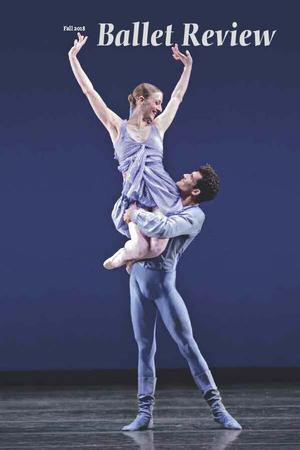
Ballet Review 46.3
Fall 2018
| Coming in the next issue…
Paris Report
by Vincent Le Baron
Since its inception, the Paris Opera Ballet [POB] has organized its dancers into ranks, now numbering five: quadrille, coryphée, sujet, premier danseur, and, finally, étoile. For the past 150 years, POB has run a unique, month-long internal competition. While not mandatory, all dancers in their early years have to compete, as it is the only way to get promoted…
Each year the contest brings its own surprises, disappointments, and controversies. This year was no exception. Just six weeks after the competition ended, and with the encouragement of a journalist from Le Figaro, Aurélie Dupont was accused of mismanaging the company, as well as allegations of moral and sexual harassment…
While the investigation’s results are not yet known and conclusions can only be drawn then, this may demonstrate, to a greater or lesser extent, how difficult it is in 2018 for millennials to accept managerial judgments and staffing decisions, especially in large, hierarchical organizations. This could be especially tricky for the Paris Opera Ballet, where the dancers come mainly from its school and are effectively civil servants who never leave the company until retirement, but who gradually challenge more and more of its rules and customs.
Such incidents are not unique to POB. English National Ballet, New York City Ballet, and the Finnish National Ballet are experiencing similar controversies. As Claude Bessy (former head of the POB school) said about ten years ago, it may be that there is a generational change that needs to be taken into account – hopefully without compromising technical and artistic standards. This will require more dialogue – new forms of dialogue – as well as behavioral changes both from dancers and from administrations. Without it, the engagement in and even the sustainability of the art form are in peril.
|